Eins vor, zwei zurück
- Choreography
- Ioannis Mandafounis
- Dance
- Emanuele Co'
- Emanuele Piras
- Simon Voitoux Puigrenier
- Jón Vallejo, Principal dancer at the Semperoper Ballett as guest
- Choreographic assistance
- Pauline Huguet
- Smaralia Karakosta
- Dramaturgy
- Philipp Scholtysik
- World Premiere Dresden06.02.2026
- Frankfurt Premiere19.03.2026
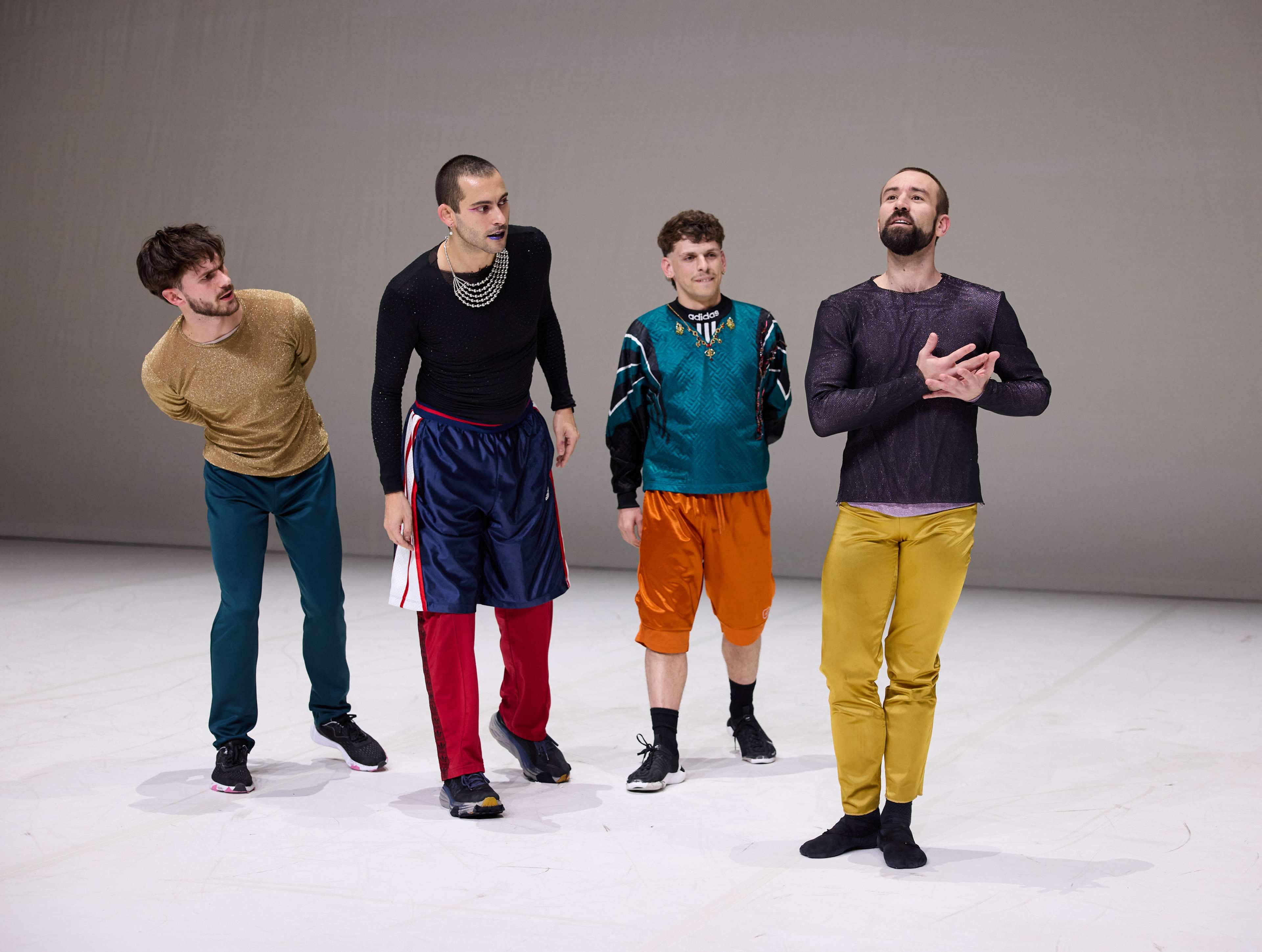
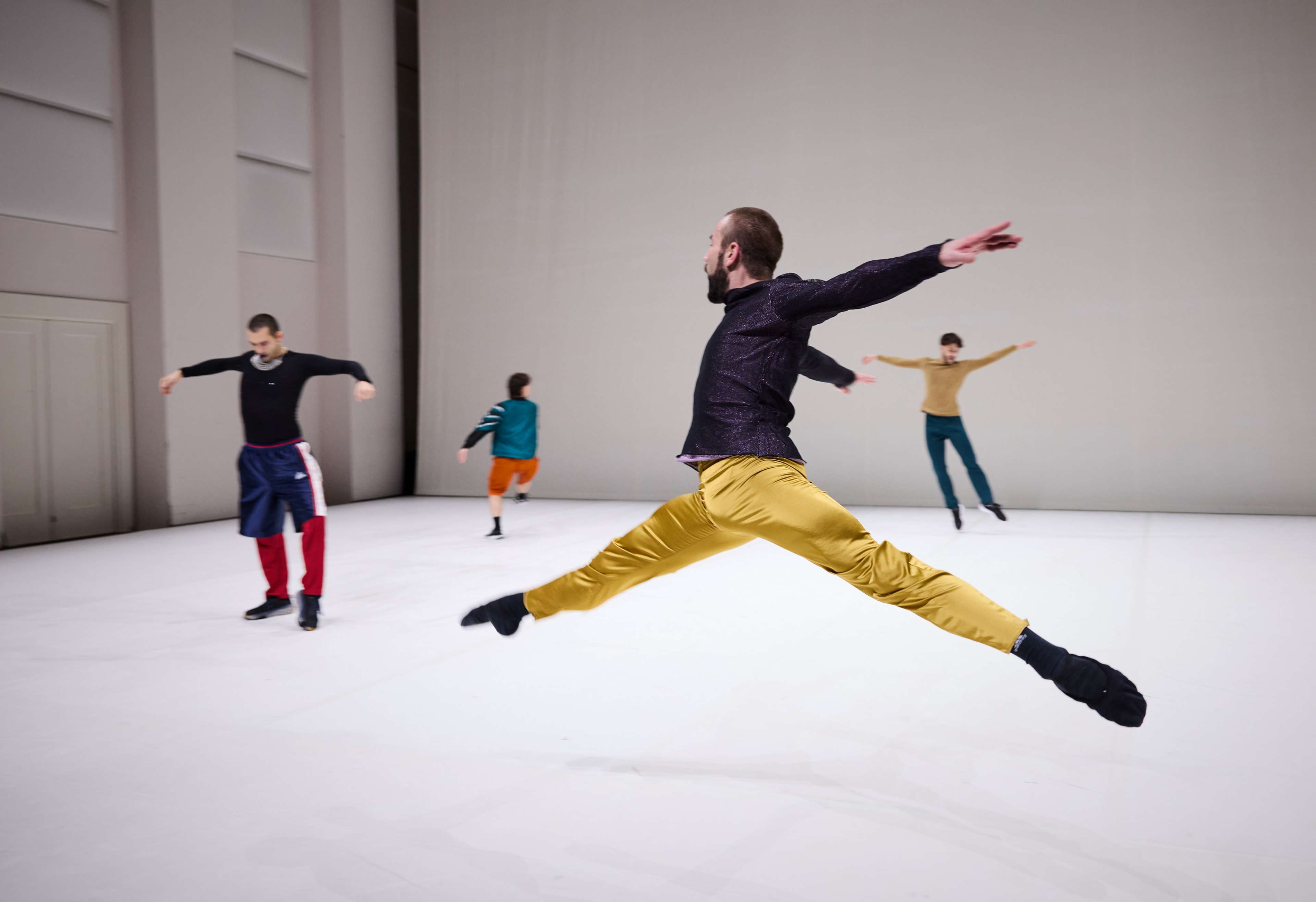
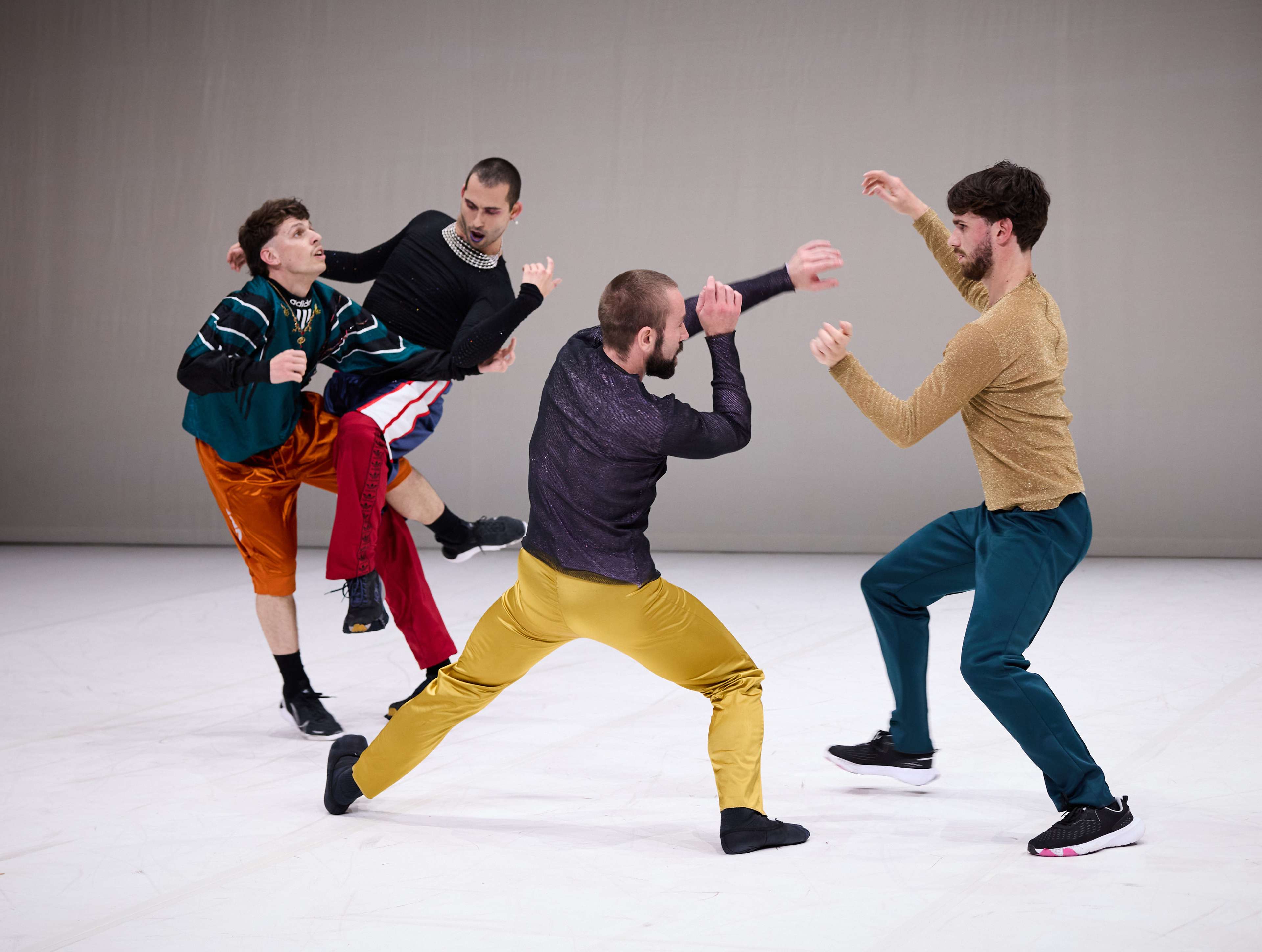
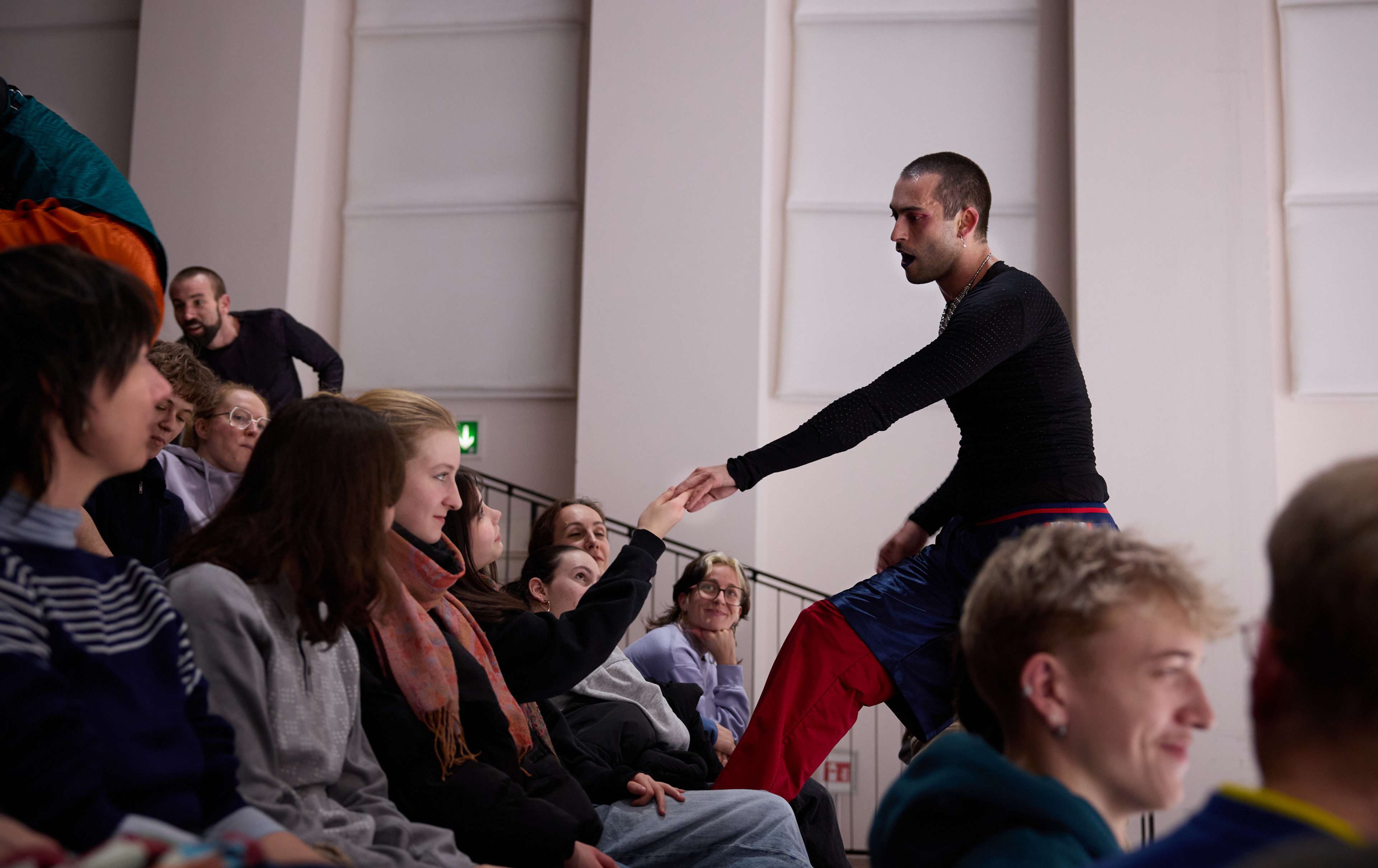
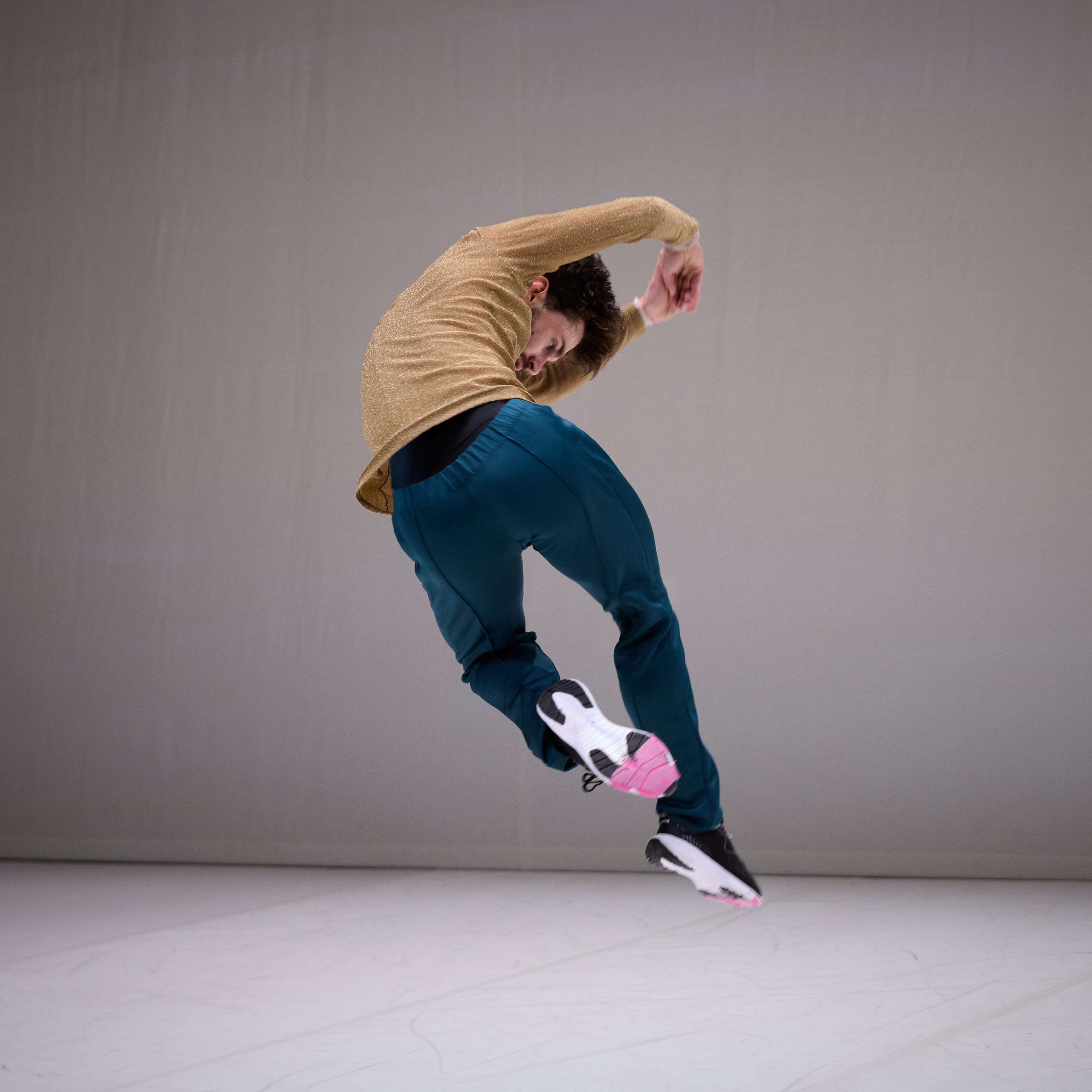
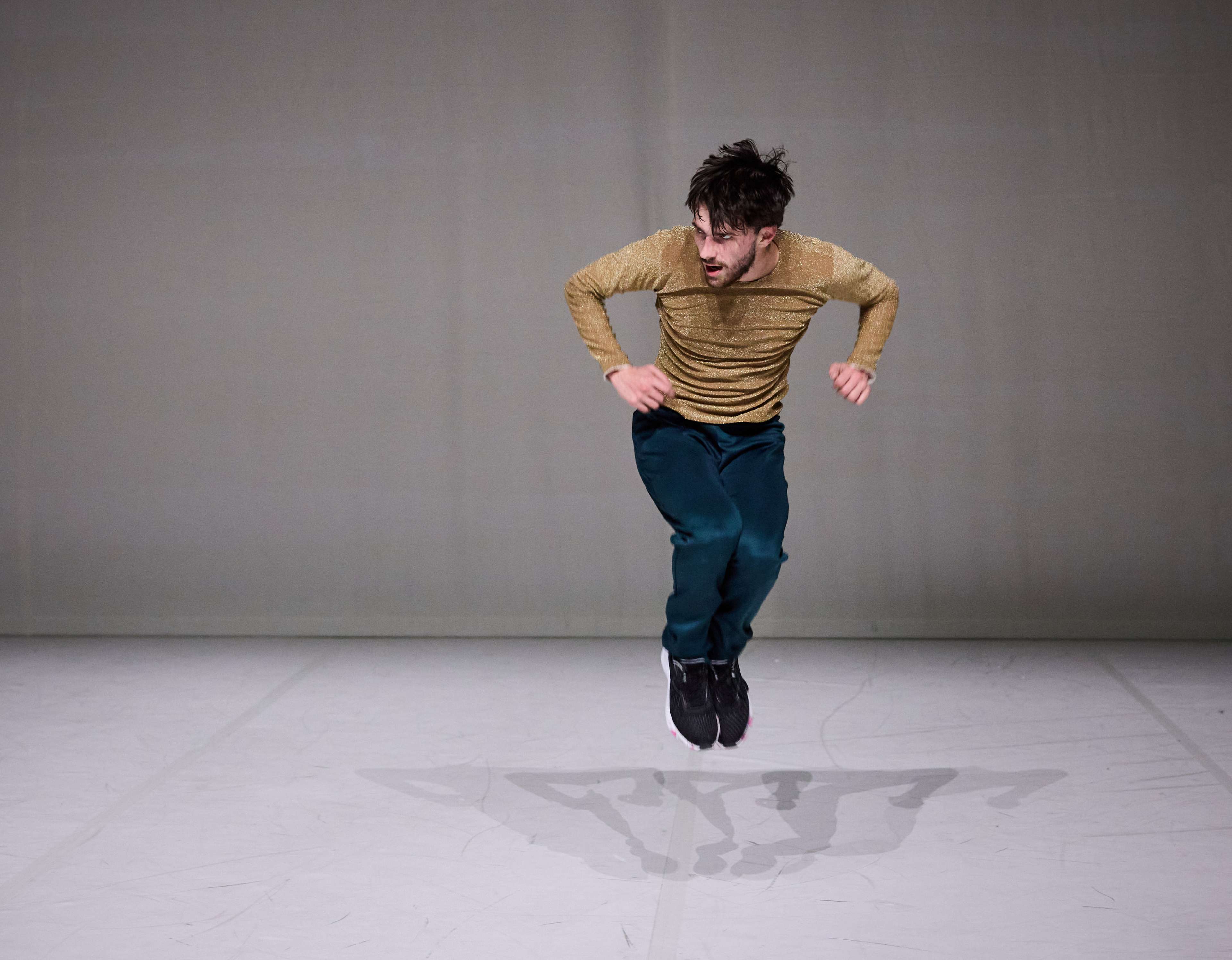
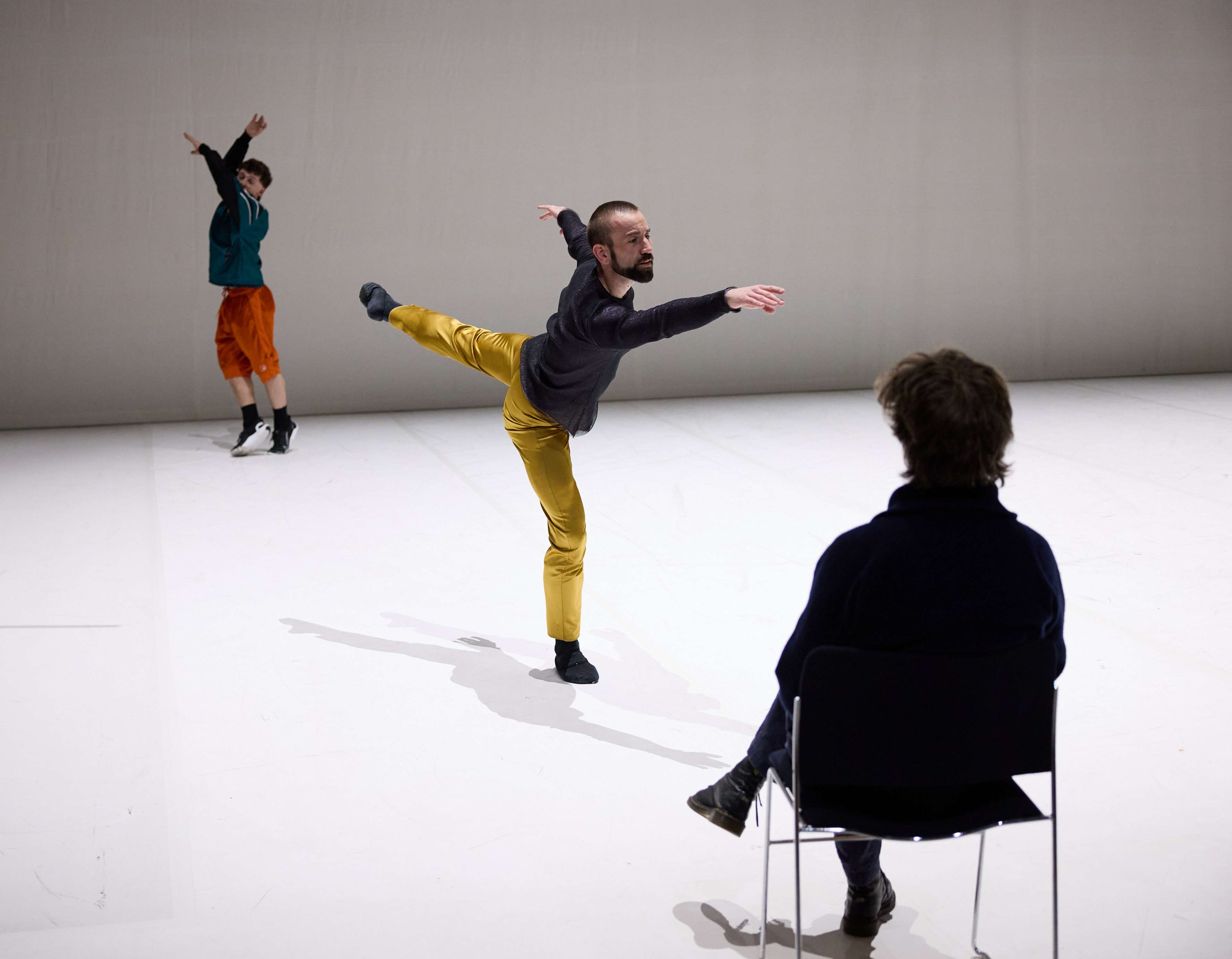
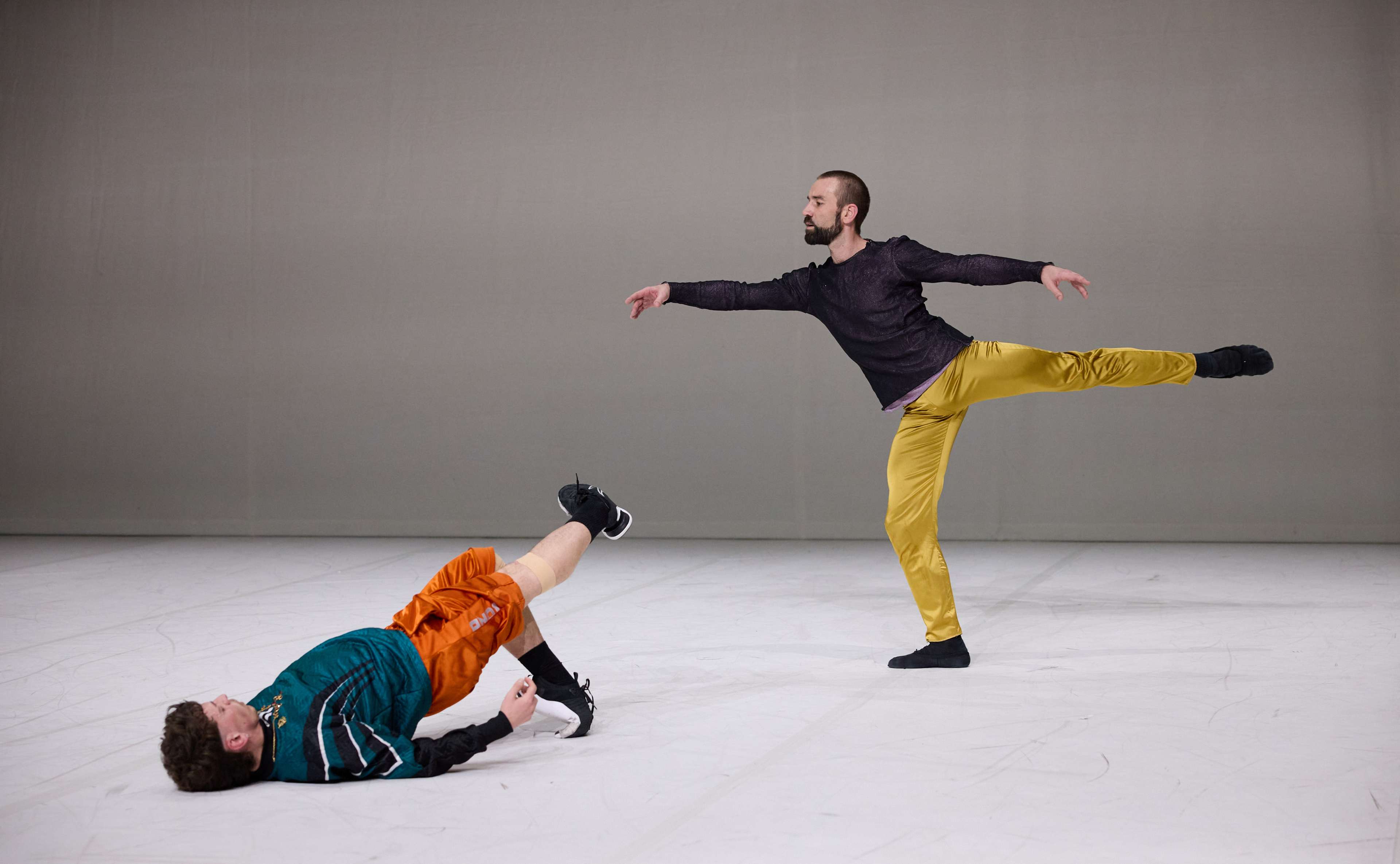
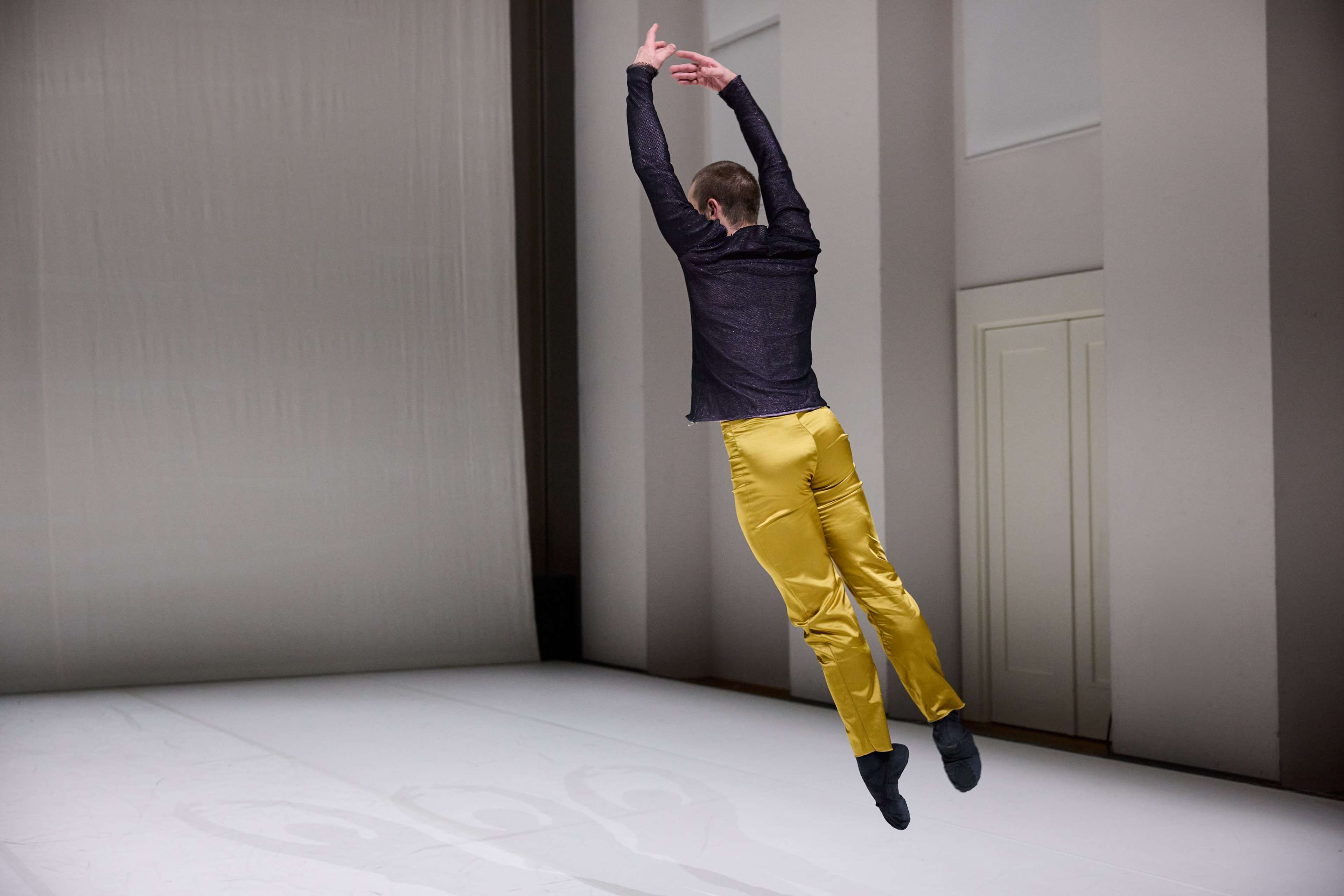
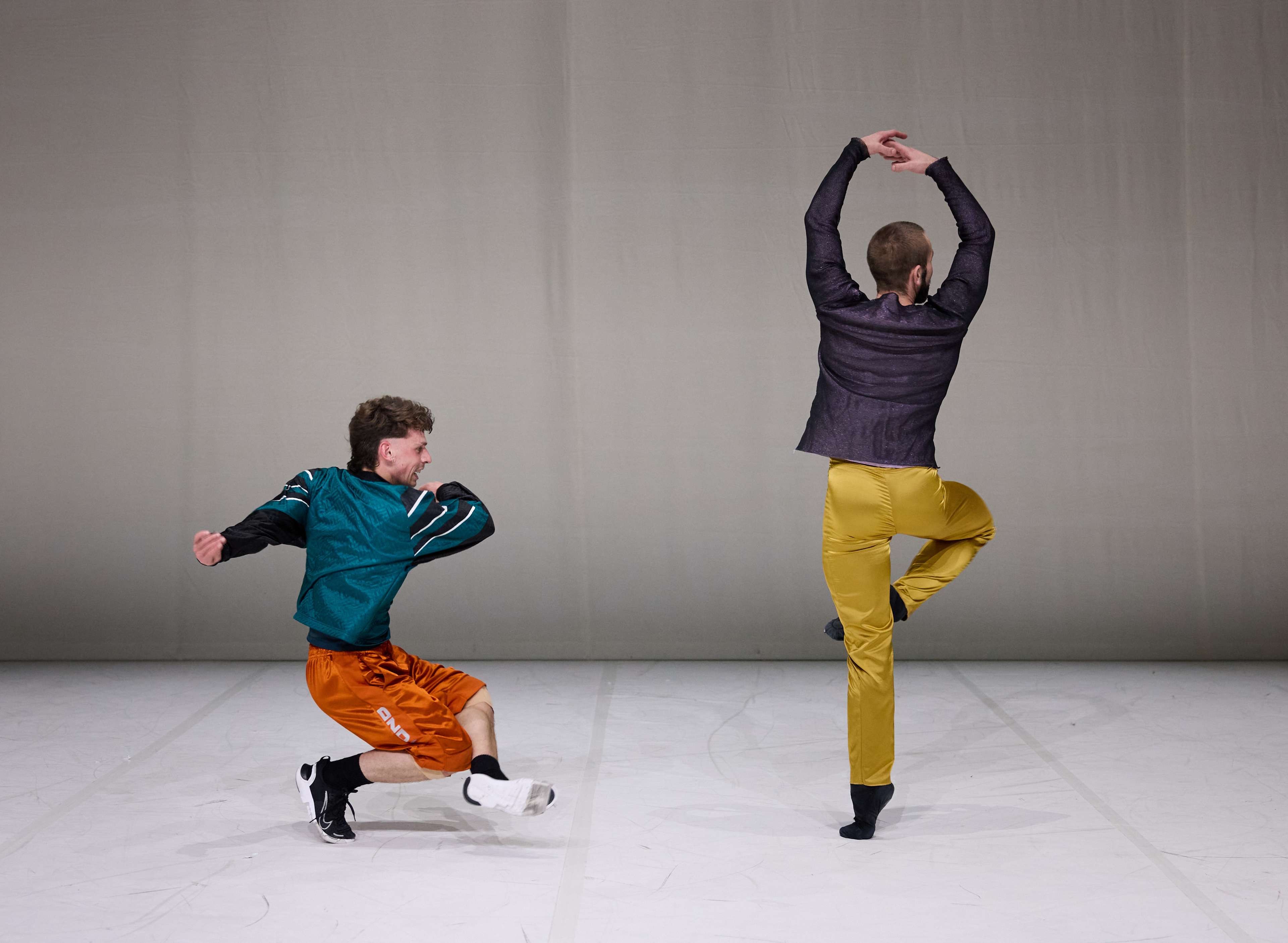
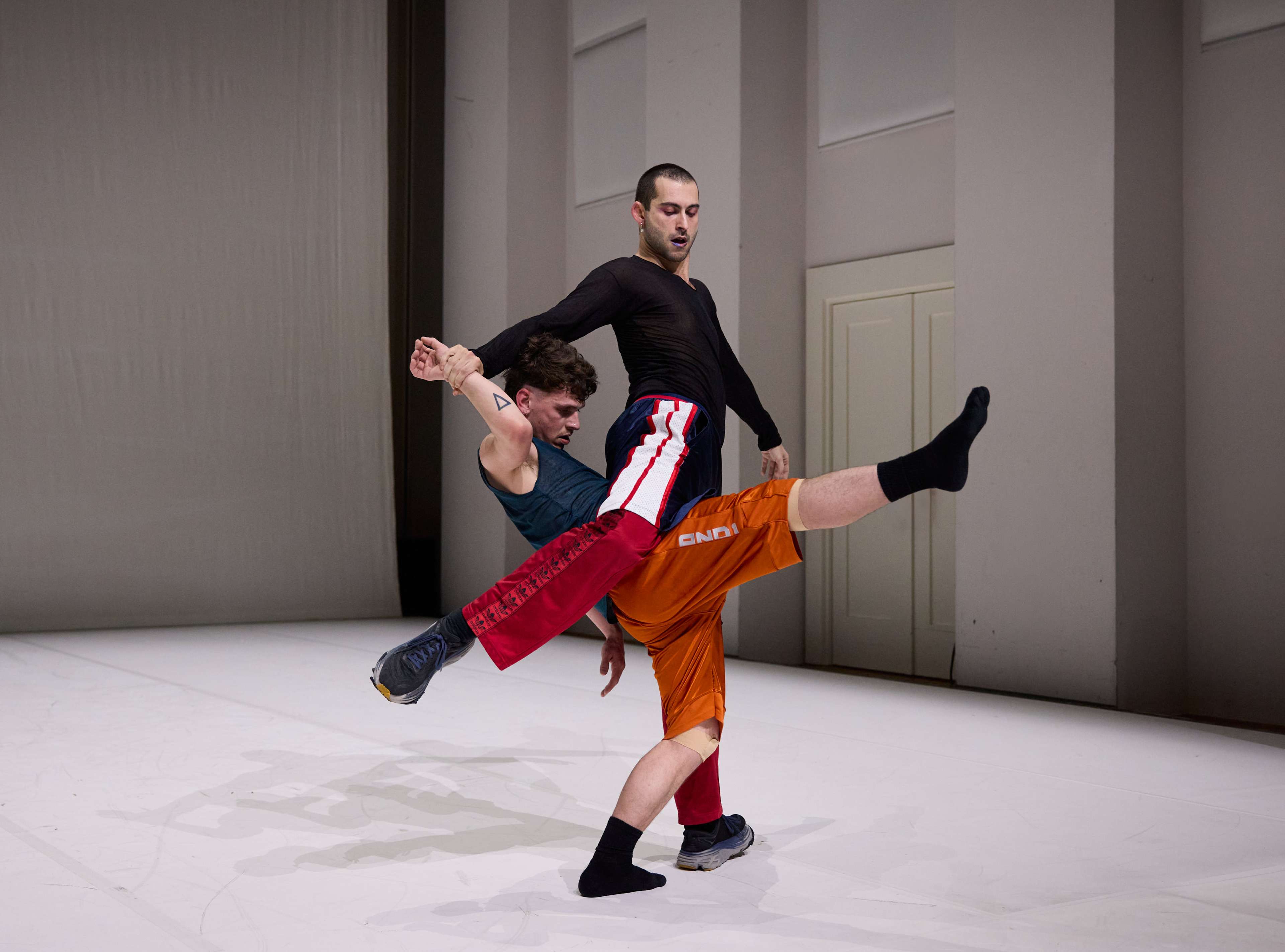
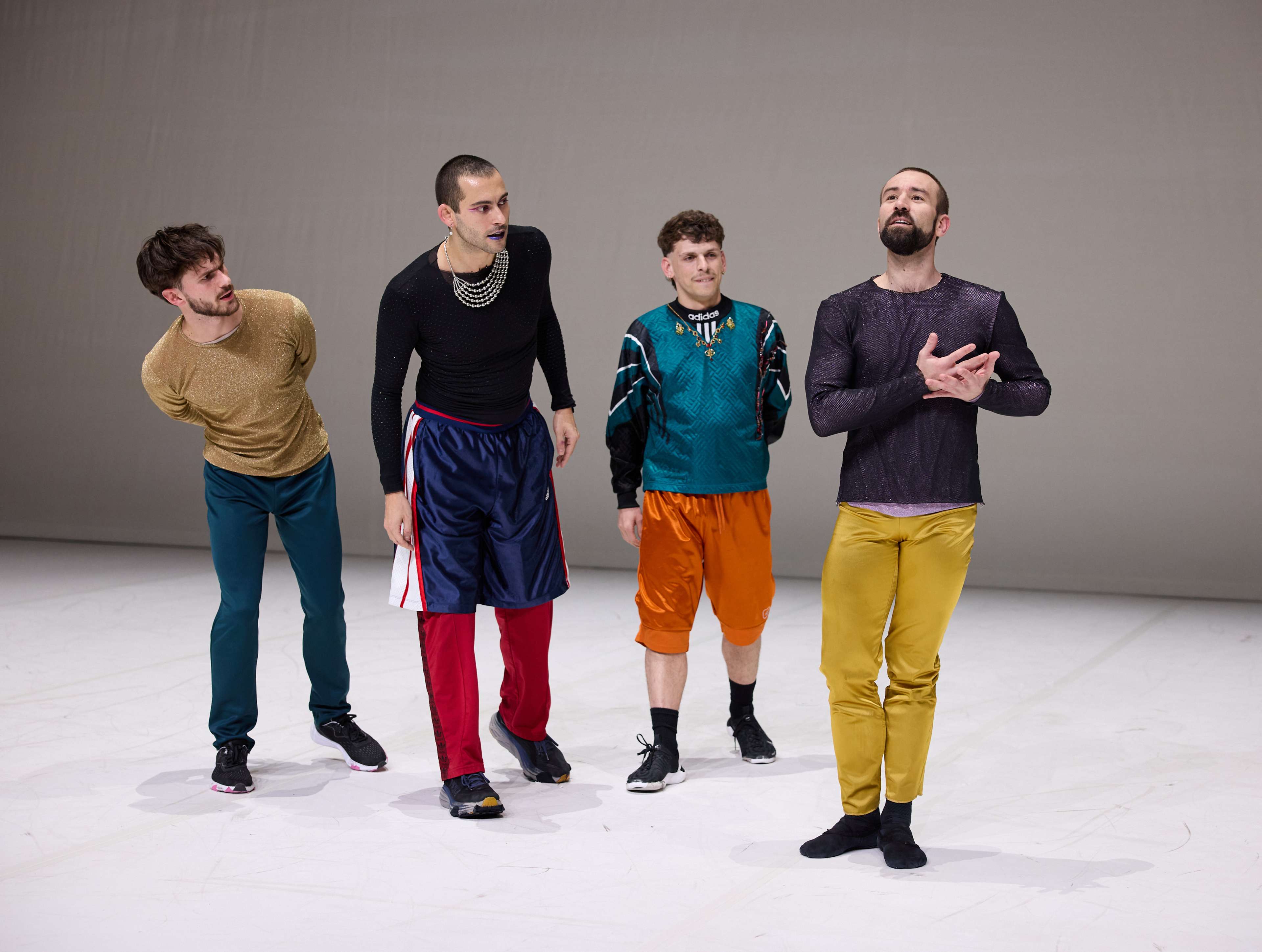
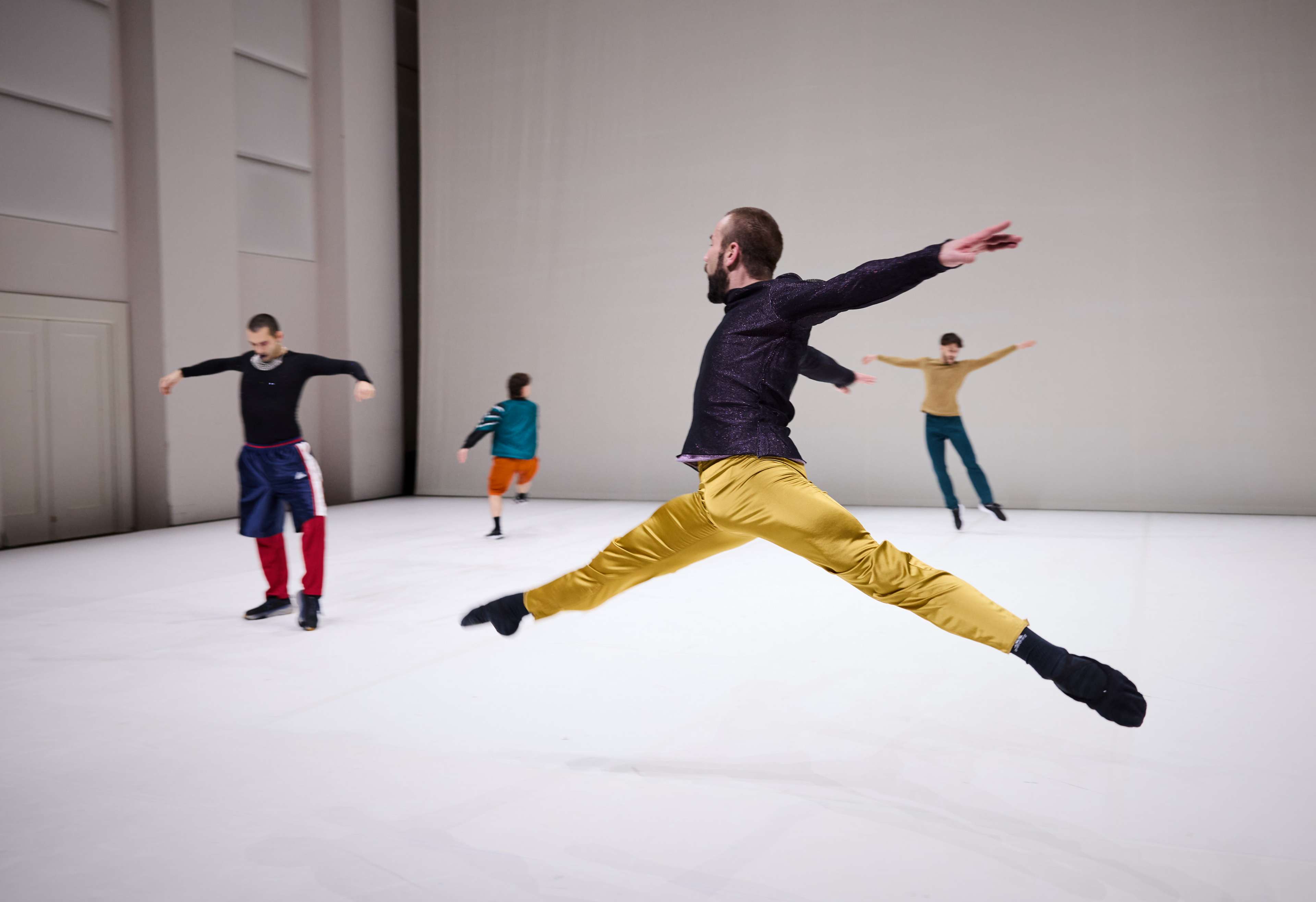
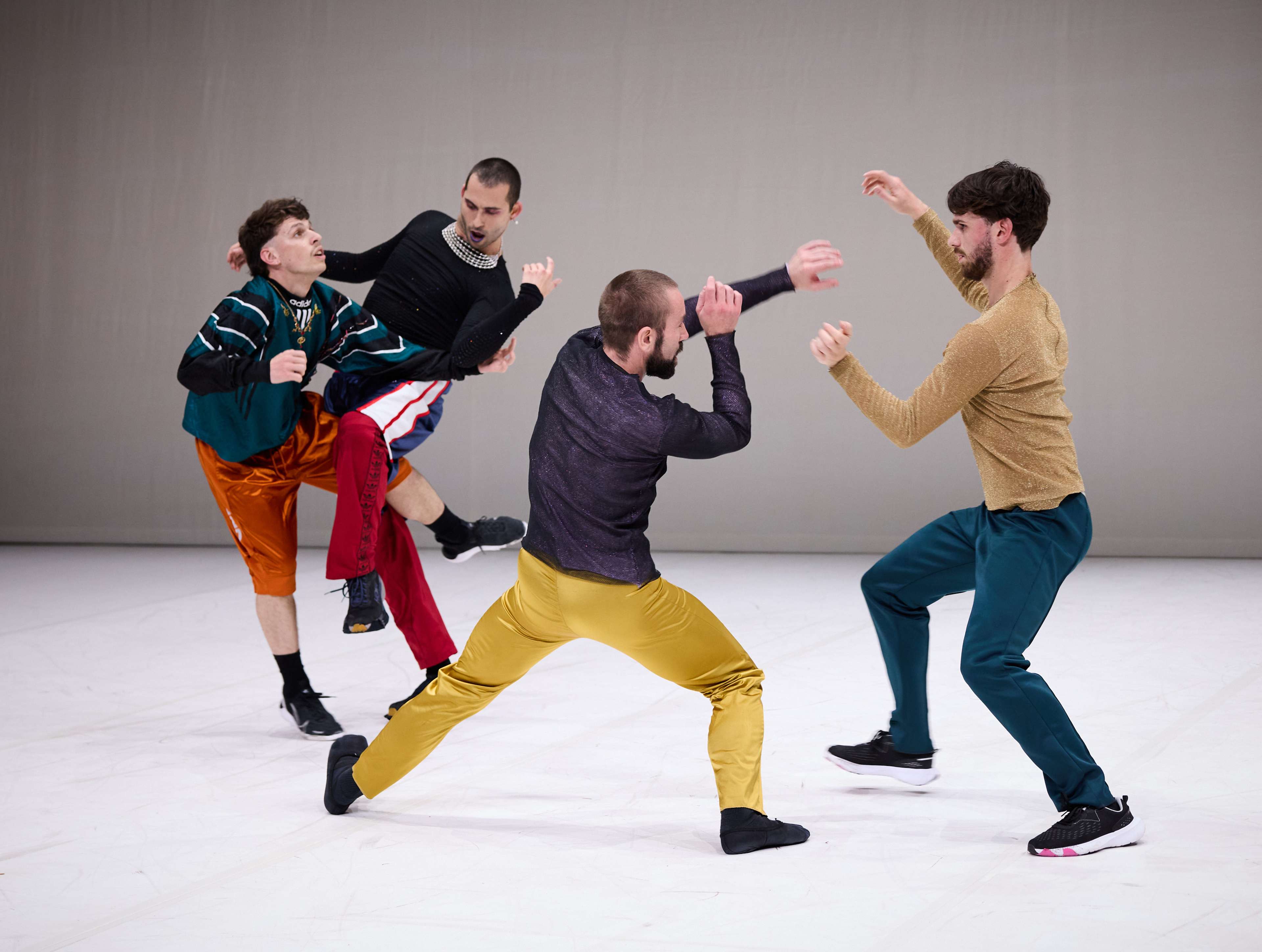
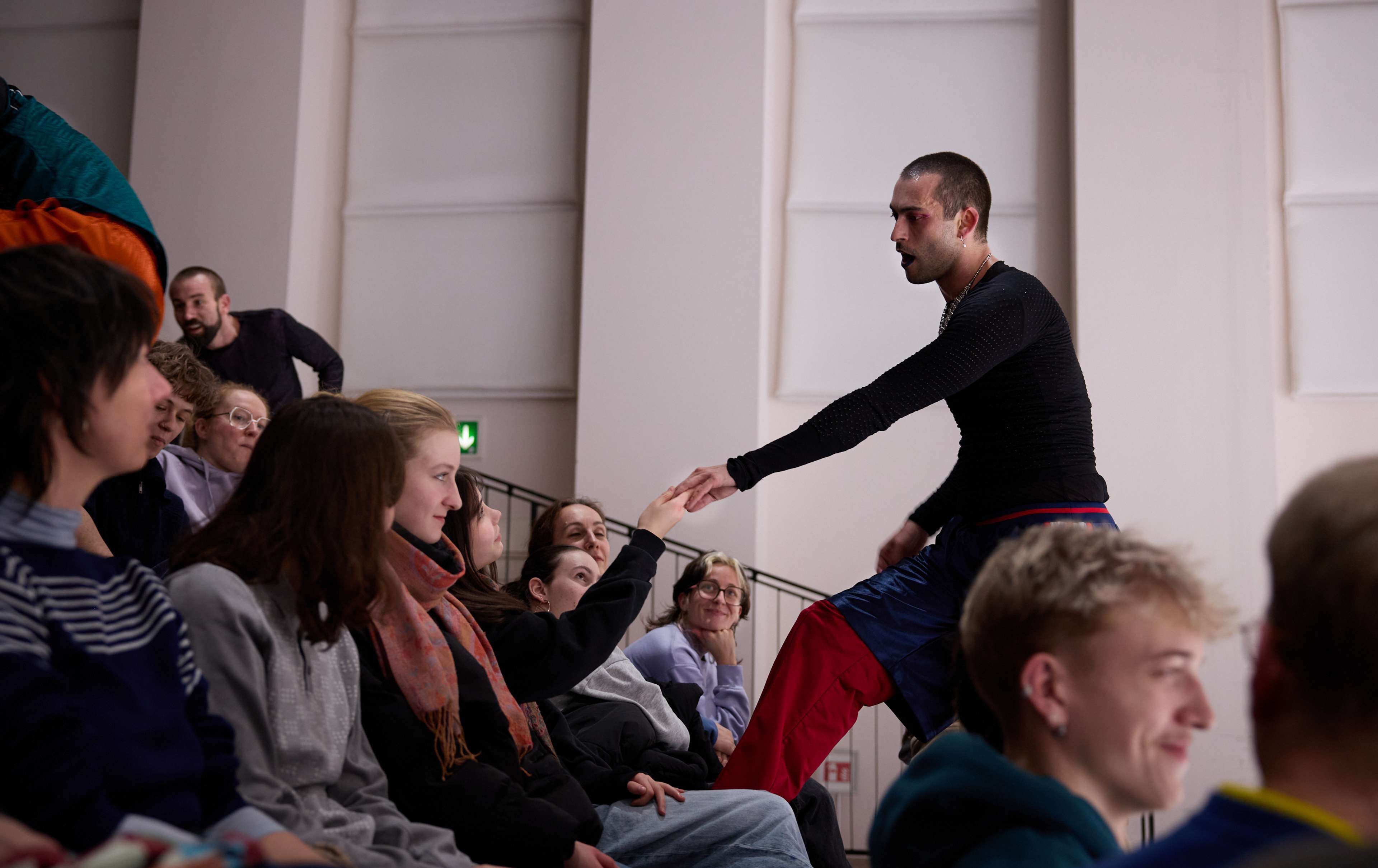
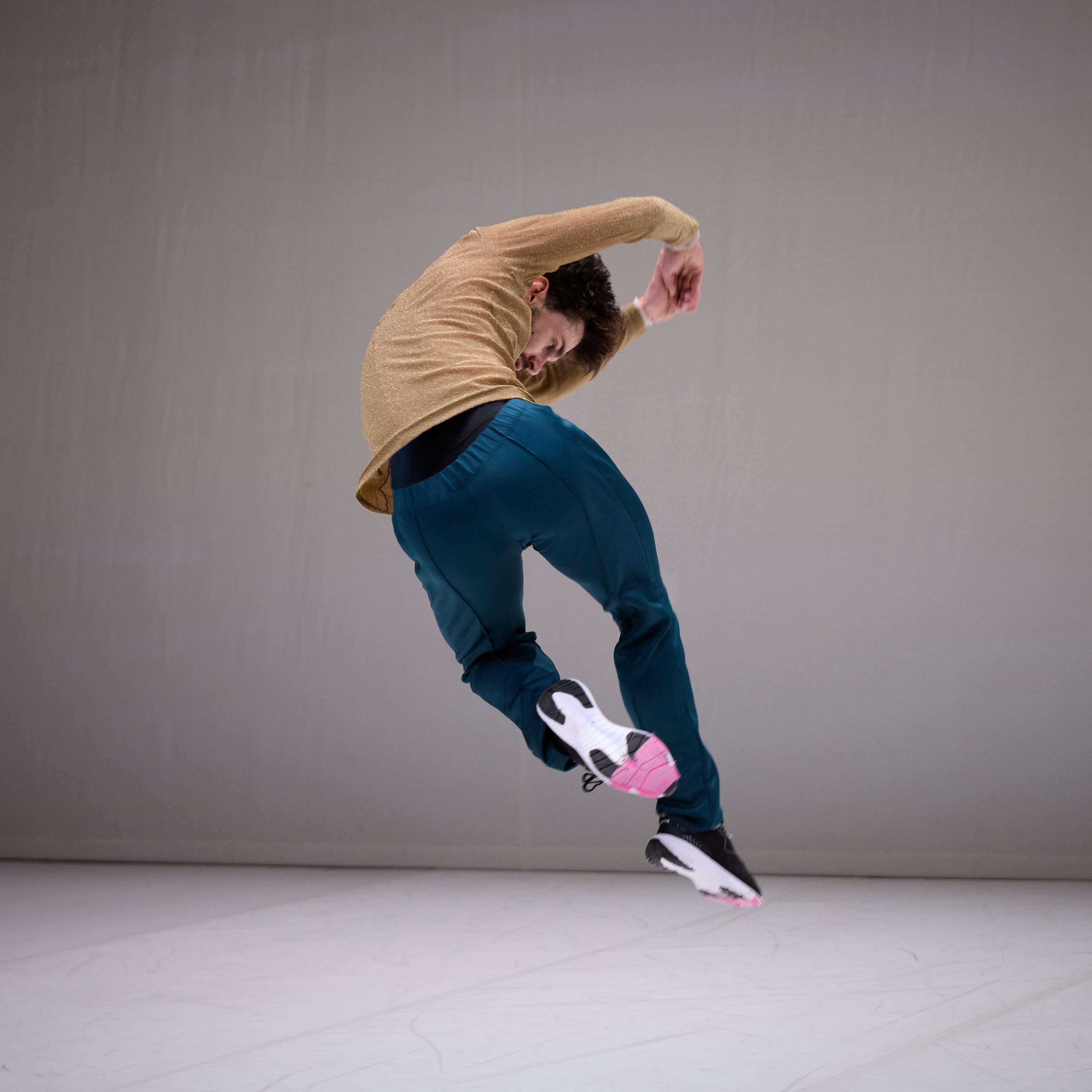
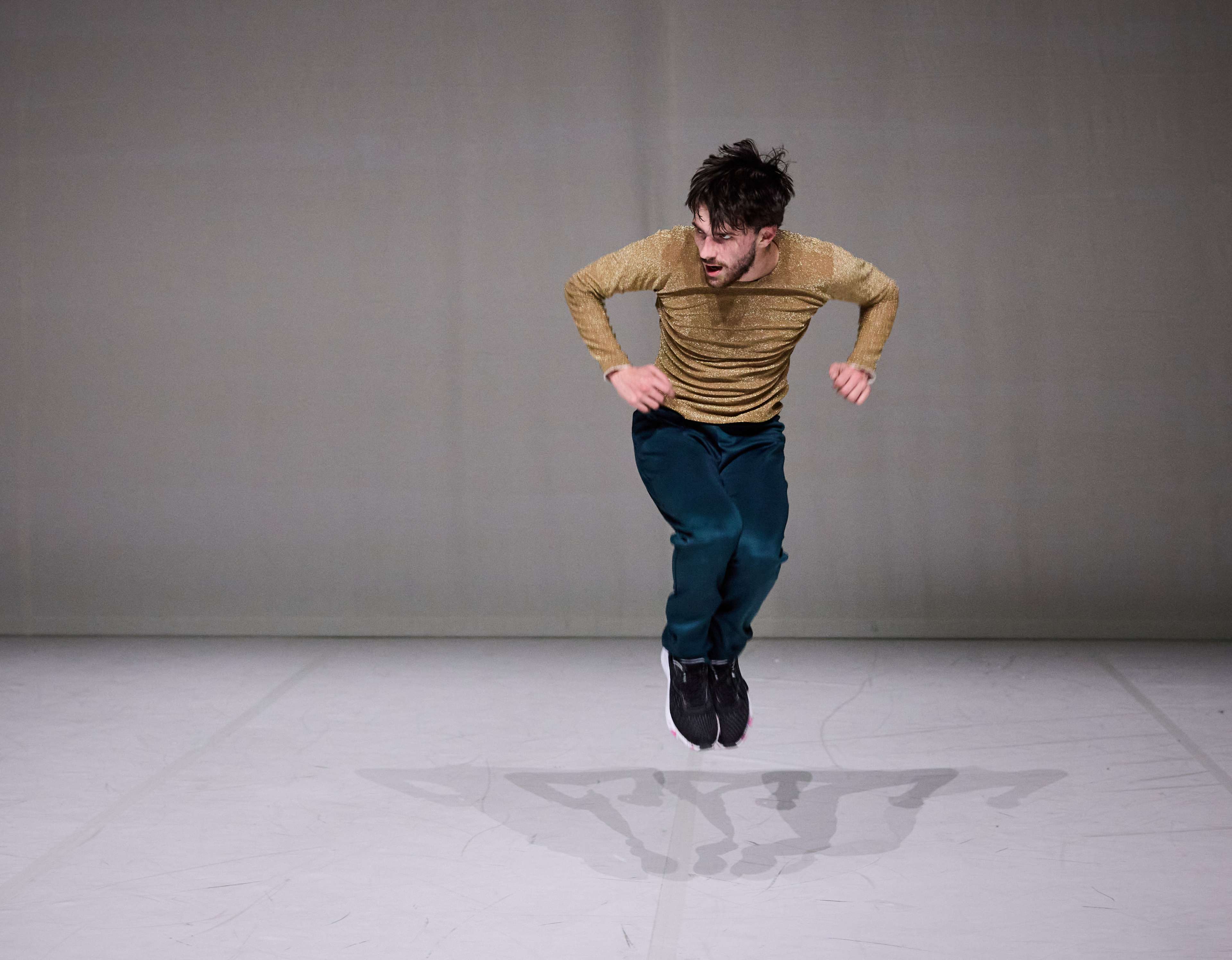
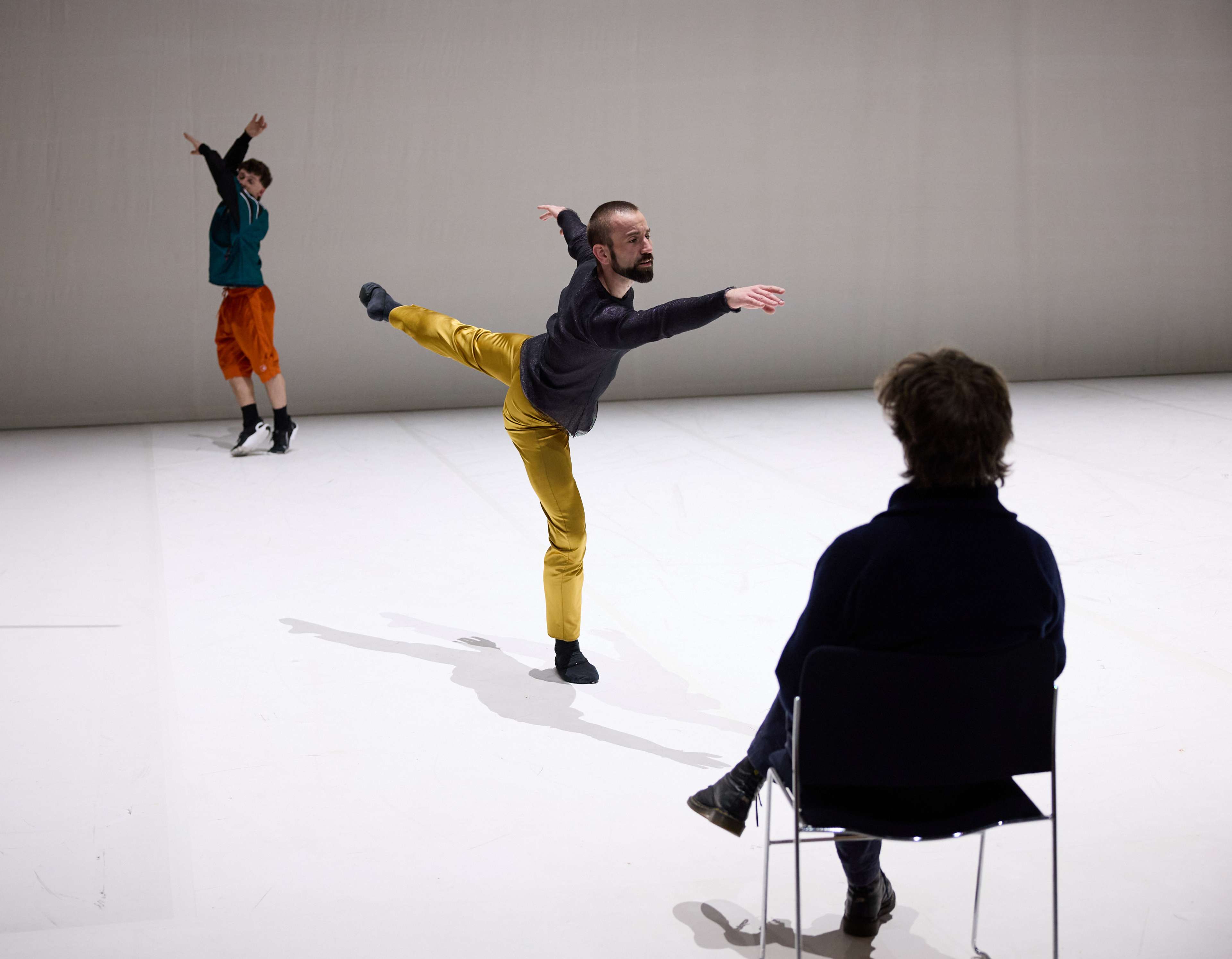
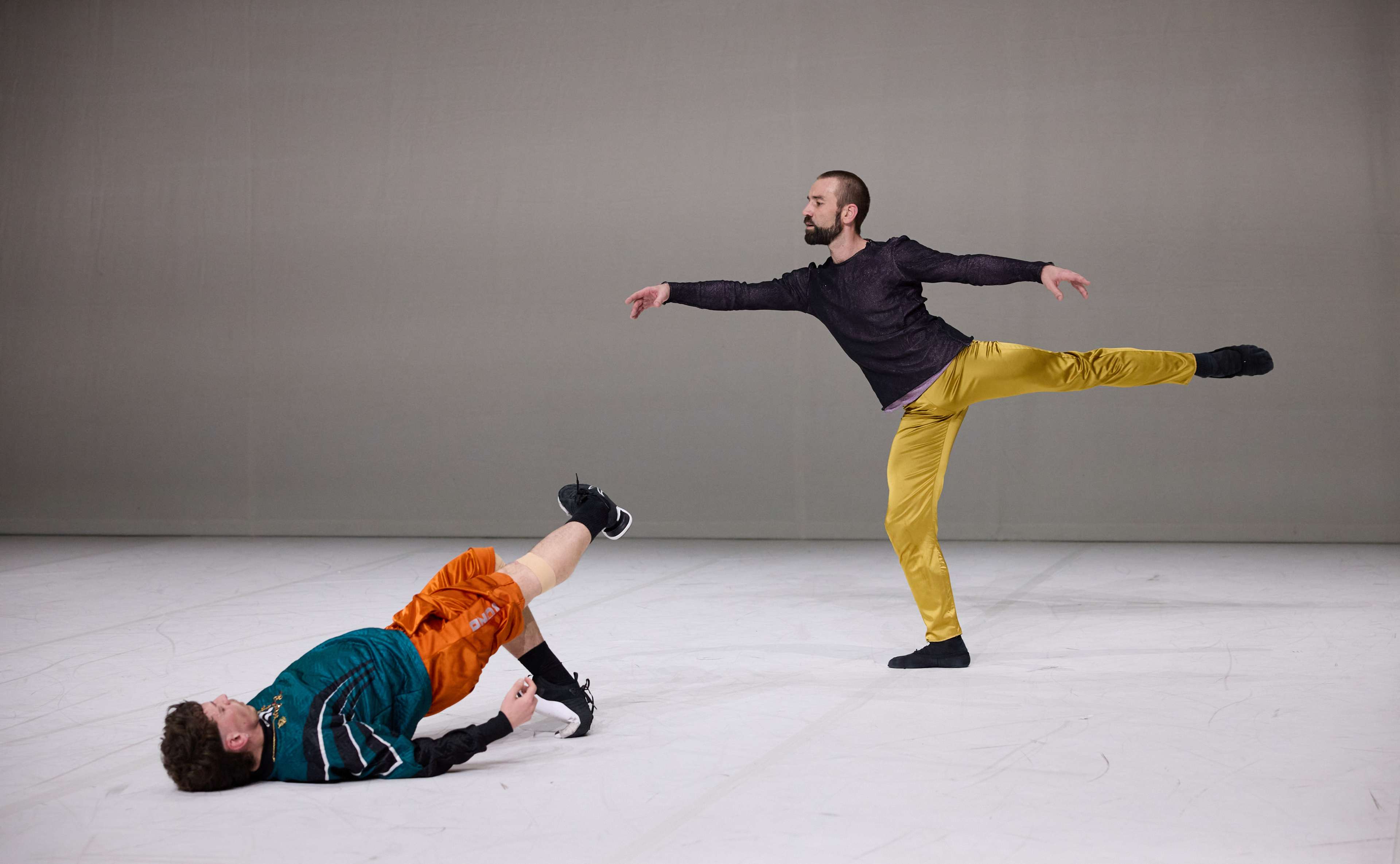
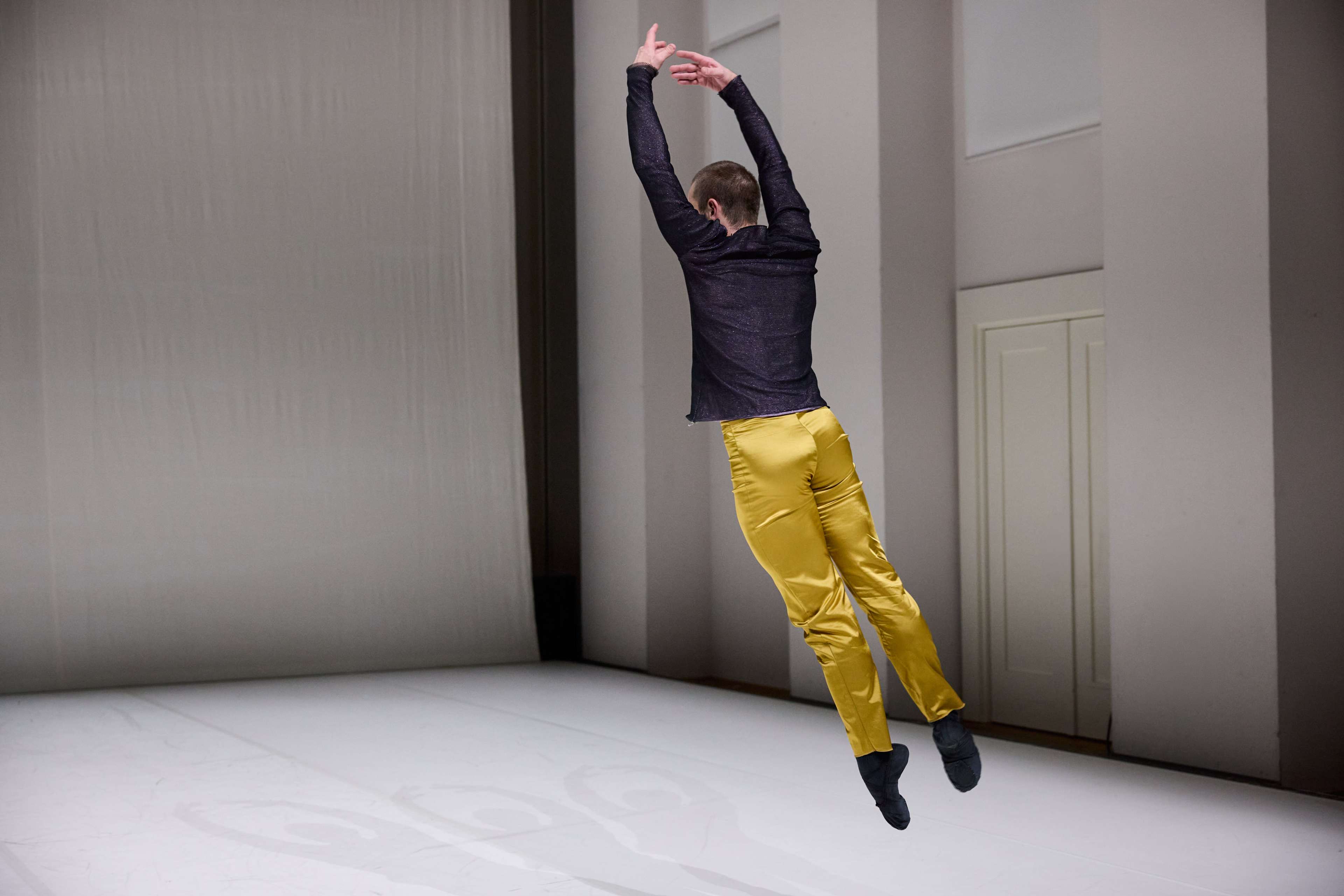
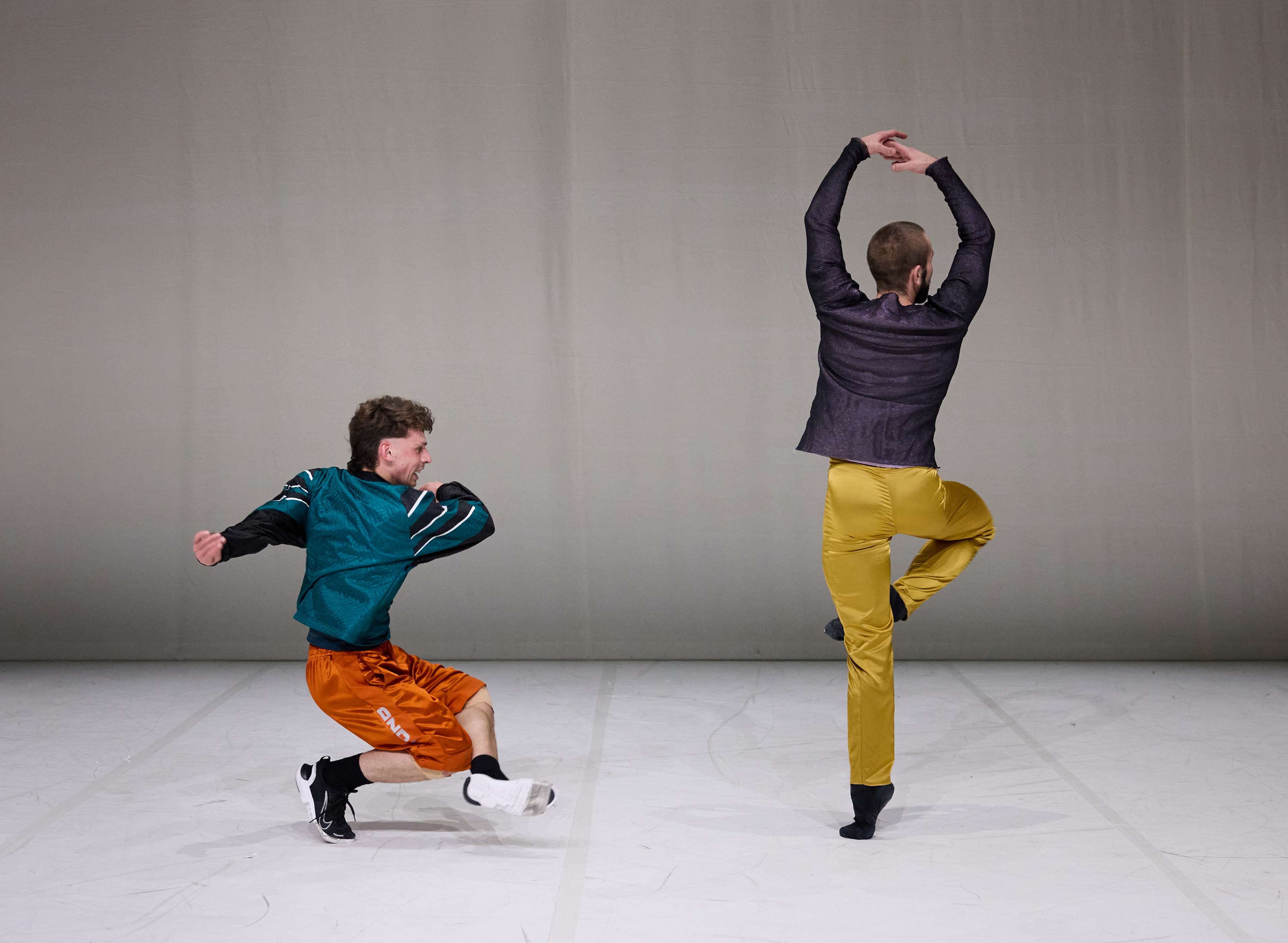
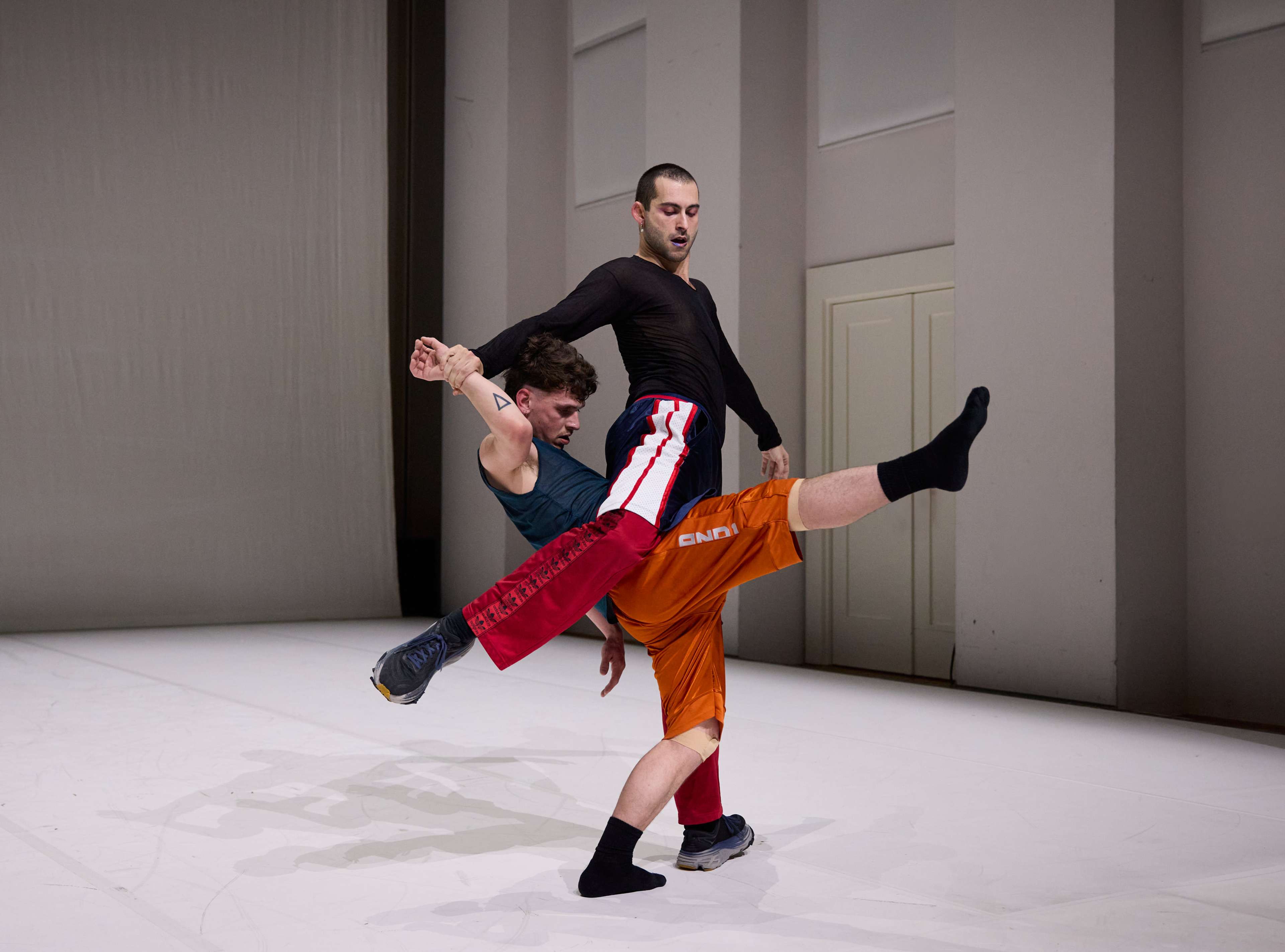
The movement vocabulary of classical ballet follows clear principles. Everything seems to serve the purpose of overcoming gravity. The bodies appear light, their mass suspended in pirouettes and jumps. Everything is oriented upwards; downward movements occur almost exclusively to gain momentum for going up. What happens when these principles are reversed? With a small cast, Ioannis Mandafounis explores typical ballet movements. They are deconstructed, turned upside down, interrupted, and transformed. Movement sequences from classical repertoire are juxtaposed with completely transformed new versions. A ludicrous game that nevertheless takes its historical source material seriously, despite all the humour. The team is joined by guest dancer Jón Vallejo, Principal dancer of the Semperoper Ballett.
Press reviews
“What physical mastery: Jón Vallejo performs jumps and pirouettes unlike anything usually seen at the Bockenheimer Depot.” – Stefan Benz, Darmstädter Echo
“No more focusing on the center of the body, away with the vertical impulse upward. Mandafounis spells out the method before applying it parodically to music ranging from Tchaikovsky to Grieg, using the example of classical choreographies from Marius Petipa to Michel Fokine.” – Stefan Benz, Darmstädter Echo
“A pas de deux—though I really shouldn’t call it that, because the two seemed so uncoordinated, so awkward, and yet very professional. The larger of the two expressed himself elegantly with graceful, classical dance movements, while the second, much smaller dancer, kept getting tangled up with the larger one. All of this set to the classical music of Tchaikovsky’s Sleeping Beauty. Here, classical ballet technique met dance improvisation. At times very funny, and I imagine very exhausting for the two dancers. In any case, for me, that was the highlight of the evening. A moment arose that was sensual and grotesque at the same time.” – Jan Tussing, hr2 Frühkritik
“Instead of mockingly trashing classical ballet, it is honored here through the juxtaposition, fusion, and blending of elegance and wild energy. Old gestures are explained in a sort of guessing game—“I,” “not,” “you,” “love”—with excerpts from five ballets, from Petipa (“Sleeping Beauty,” 1890) to MacMillan (“Manon,” 1974), danced to recorded orchestral music. All four men can execute the lines, arabesques, jumps, and pirouettes. Vallejo, in turn, can also sway, undulate, and whirl. But he remains the king when he stops time in dance.” – Melanie Suchy, FAZ Rhein-Main
Partners & Sponsors
In Coproduction with